The Lay of the Land

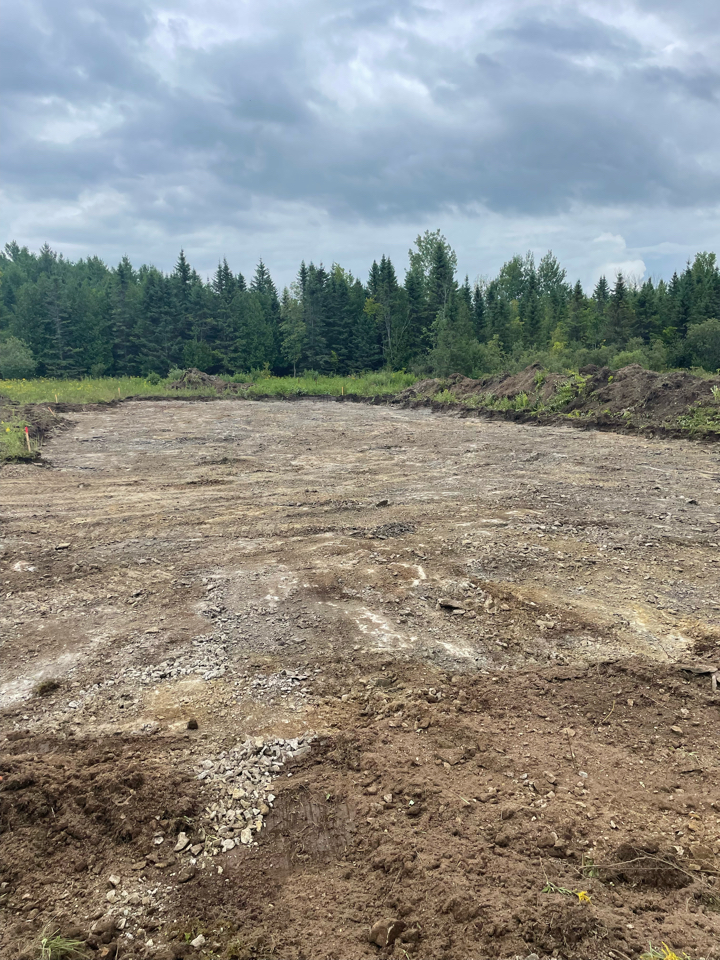
Image of excavated land
Who knew excavation could be so exciting (not always in the best way)

Permits in hand, we were ready to begin work. We got our culvert and temporary access (i.e., our driveway) installed, then had the surveyors place pins for excavation, and sought official quotes for excavation. This was the source of our first major snafu. 

We were expecting that excavation would be no sweat, our land was relatively flat after all and we didn’t need to dig a basement. However, while chatting with the person installing the temporary access, he mentioned that from our grading plan, it looked like we were importing an awful lot of fill. This was an understatement. When the quotes came back, it was about $100,000 worth of fill, not to mention the labour to install it and the gas to ship it. We were floored. This could be a knockout blow before we even started. It also wasn’t what we wanted, our house would have towered over the landscape, perched on a hill we built.

Thinking it over, a few things brought us to this point:

  1. We decided to build a raft slab foundation. Our project manager had recommended it to save cost and our architect agreed. This is a foundation that essentially floats on the ground. You insulate on all sides of the slab, obviating the need for footings below the frost line. It isn’t the norm for this area but is becoming more common. And it seemed to make sense for our house and our land, where there’s bedrock close to the surface. It would save us having to blast.
  2. Because it’s an unusual construction type, the foundation seemed to stump a few people, including our grading designers, who designed the grading similar to how it would typically be done (like in a house with a basement). We would have appreciated a discussion of the different options and implications.
  3. Our lack of experience and construction knowledge meant that we didn’t glean any of this from the grading plan – and it wasn’t obvious to anyone else involved (or wasn’t flagged if it was).
  4. Because the subtrades weren’t willing to provide quotes ahead of time, our project manager’s estimate was based on previous jobs rather than our specific circumstances and ended up missing the mark.
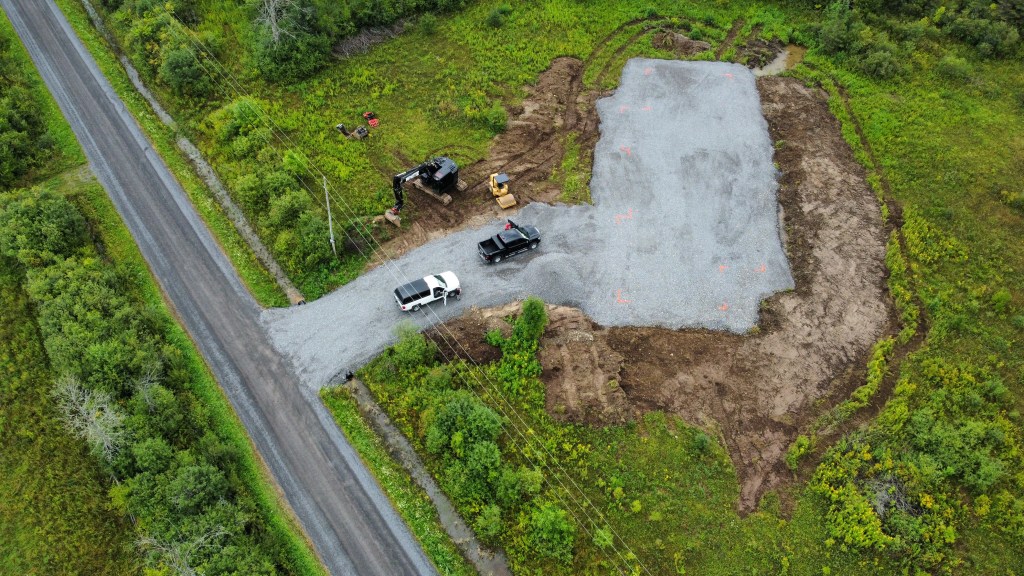
Image of gravel pad for slab on grade house
We got our pad!

We had to get the septic and grading plan amended and resubmit for approval. The whole process set us back over a month. Our excavation cost was, in the end still higher than originally estimated, but we hope to make it up in other ways along the way. We’re just happy we didn’t have to build our own mountain.

Finally, in August 2022, we had our pad and were ready to start the structure!

We did hit another hit another minor snaggle with excavation when the surveyors came in to pin the foundation. They thought the excavator put the pad in the wrong place. We checked and it was exactly where we wanted it, so if that was a mistake, it was a happy one for us, though it did lead to a little finger point between the subtrades. You win some, you lose some.
Submitting for Permits

At the beginning of 2022, all our ducks were nearly in a row when we caused our own delays by rethinking our house design. It wasn’t a major change in the grand scheme of things, but we ultimately decided to go with our gut on two things weren’t quite sitting well with us. One was to bring our kitchen closer to our south-facing windows for more natural light and views and the other was to nix the idea of an unconditioned entryway – our architect had used in other projects but that we weren’t totally sold on it. 

My take is that you shouldn’t have to work too hard to convince yourself that you can live with something, so if it bothers you, change it while you have the chance. Also, it’s best to feel sure by the time you submit for permits because things start to feel very real from that point. Designs done and dusted, we were ready to submit for permits at the end of May 2022.

There are a few approvals we needed to get before breaking ground on our house, including:

  1. Septic permit
  2. Private approach permit
  3. Building permit

Each of these needed supporting documents and had fees attached.

Septic Permit

Because we are building in rural area, we won’t have any connections to city services for sewage or water. This means we need to install a septic system and a well. In Ottawa, septic systems require a permit, which is issued by the Rideau Valley Conservation Authority (RVCA). To apply for a permit, you need a site plan showing your proposed system and a grading plan. We hired an engineer (our architect arranged this) to draw these up. We found placement of the house on the site seemed fairly arbitrary, so there was a lot of back and forth with the grading designer to make sure it was oriented properly and located where we wanted it.

We paid around $900 in application fees and had our permit issued by RVCA within about two weeks of applying.

Private Approach Permit

If you are installing a driveway in Ottawa, you need a private approach permit to connect to the City’s property. Inspections and approvals go through the Right of Way Permit Office. You need to provide your site plan showing your proposed driveway, an application fee ($182), and a $3,000 Right of Way damage deposit. You can apply for a refund of the damage deposit after the work is done, provided no repairs to City property were needed.

One inefficiency we found is that your building permit application must be submitted in person at a City of Ottawa Client Service Centre. This is also where you pay your ROW damage deposit. The private approach permit application and application fee, however, must be submitted separately to the Right of Way Permit Office, which can only be contacted via email. You email your application then wait for them to call you to collect payment. 

The inspector texted me a picture of my approval within a few days of submitting my application, but it took another four weeks before I received a call back from someone to collect payment and issue the official permit. Perhaps some additional review takes place behind the curtain.

Building Permit

Building permits are issued by the City of Ottawa Building Department. This is a big package to pull together requiring a fair bit of coordination and includes:

  1. Your completed application form (architect completes most of this)
  2. Two hard copies of construction drawings reviewed and stamped by a structural engineer (architect created drawings and had them reviewed)
  3. Your septic permit, septic design and grading plan (completed by septic and grading designer, approved by RVCA)
  4. Your HVAC design (HVAC designer creates this)
  5. Your truss design (truss company designs this)
  6. If applicable: woodstove details, including manufacturer instructions for installation of stove and chimney
  7. A cheque for your building permit fee
  8. A cheque for your development fees

The building permit fee is calculated based on the total square footage of your house while the development fees are based on where you are located within the city. Our total development fees were about $20,000, which is at the low end for Ottawa.

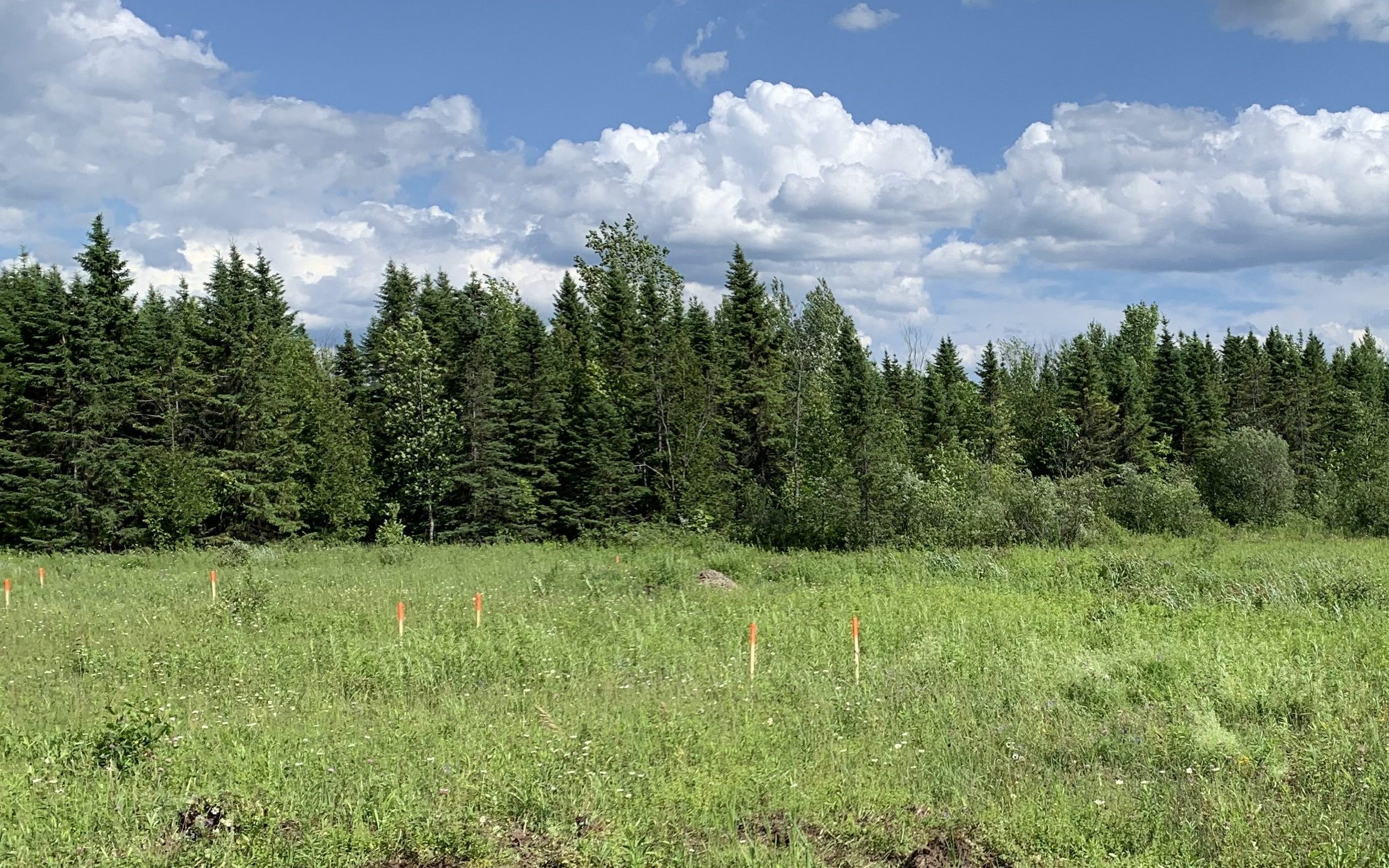
Image of raw land with surveyor stakes marking perimeter of house to be built
Ready to build at last!

Once the package was submitted, the waiting game began. At the counter, the clerk said it takes about 10 days for a permit to be issued. Ours took about six weeks, which our architect and project manager assured us was quick compared to other projects they’d seen, particularly during pandemic times. 

Once submitted, your application does the rounds around the building department and if there are questions, the reviewer sends you a formal letter (via email thankfully) requesting a response. We only received two questions. The one we could answer instantly and the other – a request for additional detail about posts on our porch – required us to get updated drawings from the structural engineer. In June 2022, we had the official green light to proceed! This was 13 months after closing on our land and starting our build planning.

Owner, Builder, Project Manager

It’s easy enough to indulge in the fun parts of designing a house, but inevitably, practical concerns bring you down to earth. After all, the perfect floorplan doesn’t mean much if you can’t afford to build it. While an architect is an expert at giving form to your ideas, the best person to tell you how much a house will cost is someone with experience buying building materials and hiring trades. You need a contractor.  

If you’re building a net-zero passive-style home, you’ve narrowed the field quite a bit to a short list of people with experience building this type of house. We started our search by Googling contractors in our area that advertised net-zero builds and found three or four to interview. This process took some time. Contractors are chatty people, as a rule, and it can take persistence to get from initial talks and hypotheticals to firm answers. Still, we found it helpful to show them what we were working on to figure out whether it was even within the realm of possibility to build within our budget.

We spent several months in a Goldie Locks period of feeling people out. One had good pricing but was moody and combative, another talked a good game but lacked follow through, and one insisted it was impossible to build a house for less than seven figures while trying to scare us away from the competition by professing ominous, but vague concerns for our wellbeing. We eventually settled on one our architect had worked with recently, Kaner Contracting. They were good-natured, organized, and could work with our budget.

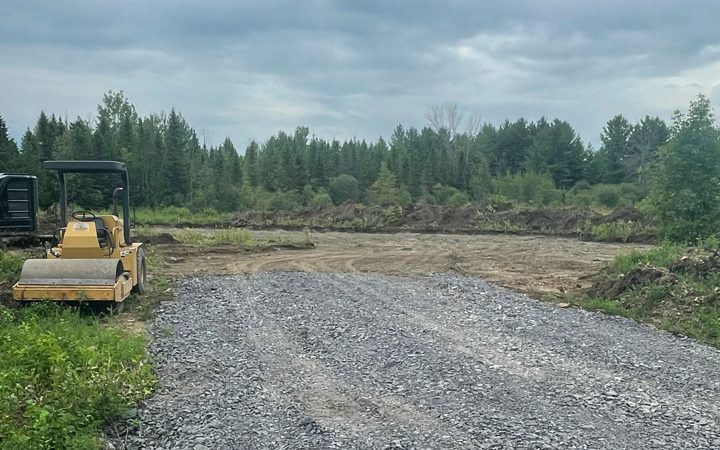
Image of steamroller on excavated land with gravel driveway
Ground officially broken!

A word on terminology, in Ontario, the New Home Warranty Program exists to ensure builders provide warranties on homes they build. In the usual scenario, a builder has control over the project and the subcontractors who build your home and then warranties the work after you take possession. If you’re building your own home, however, you may opt to be an owner-builder, meaning that you retain control over the project and are responsible for hiring subcontractors directly. You may hire a project manager with experience in building to coordinate the project. In this case, you don’t have a builder to warranty the build, though you still have the warranties of each sub-contractor. This is the route we opted to take for greatest control over our project. We also wanted to reserve the option to do some things ourselves where it’s within our abilities. All this to say, though I use contractor or sometimes builder as shorthand, we are our own builder and hired a knowledgeable project manager for our build.

With our project manager hired, it took several more months to get anywhere close to firm costing of our project. It seems that subcontractors don’t like to quote services too far out and, factoring in rapidly changing material prices throughout 2021-2022, a project estimate was a slippery fish to catch. We found ourselves a bit bemused trying to figure out how to keep within budget. All our ideas for keeping building costs down – things like simplified footprint, lower ceilings, less square footage – we’re shrugged away by contractors as saving us a bit but ‘not that much.’ Ultimately, it seems, building a house is a leap of faith. We got as close to a comprehensively quoted project as we could, took a hard look at our finances, our mortgage approval, and worst-case scenarios, and jumped. 

Our project officially kicked off in June 2022 with surveying and installation of our temporary access. We quite like our wide driveway!

Dreams Take Shape

Building a custom home is certainly a privilege and the experience of a lifetime. We spent long hours talking through what we wanted, researching ideas, reading books, exploring neighbourhoods for inspirations, measuring rooms, and sketching out plans. The process of designing a house truly forces you to think thoroughly about how you envision your life, now and in the future, how you use spaces, and what you can live with or without.

We eventually settled on a list of goals for our home, which we talked through with our architect in the beautiful home she designed. A week or so later, she let us know she had a preliminary design to show us. With bated breathed, we excitedly awaited the big reveal and… we didn’t like it! The first sketch we saw had the elements we’d discussed but didn’t feel right for us. But designing a house is a process – we talked it through, pointed out what we liked and did not, and sent some more sketches of our ideas. A week or two later she came back with two new options and this time we were quite pleased!

I downloaded RoomSketcher, a free floorplan design app, and recreated the plans. This allowed us to play around with ideas, move furniture around, and visualize the spaces in 3D. We polled friends and family on their thoughts and eventually settled on the plan we liked best. From there, we had quite a bit of back and forth on window and door configuration, trying our best to get right the details that are hard to change.

Image of cardboard house with LEGO furniture
Our little Bristol Board home with Lego furniture and lots of houseplants for that homey feel.

It’s hard not to get excited as you picture life in your future home. Not to be satisfied with digital renderings, we wanted something tactile we could walk through and play with. We bought a 60-metre measuring tape and pinned our floorplan on our land with sticks and string. We even got crafty and spent a couple cozy evenings constructing a scale (though somewhat floppy) model out of Bristol board and Lego.

One thing that’s always in mind when building a house (at least in my experience) is budget. We learned quickly that if you want to keep your design within budget, you need to loop in a builder early as they’re the ones with experience costing materials and labour. So, after a few weeks working on the design, we were happy with our plan and turned our attention to choosing a builder, another learning experience. As it turned out, we’d have a few more tweaks later in the process but that’s still to come.

This is the list we dreamed up of wants/goals for our home:

Multifunctional Spaces and Room for Hobbies

  • Every space has a purpose
  • Spaces align with how we actually use them (i.e., no formal dining room)
  • Spaces are multifunctional and accommodate togetherness or privacy
  • Small office/guest room/flex space 
  • Minimize single use spaces, such as hallways
  • Flexibility to reconfigure spaces if needed, e.g., add more bedrooms
  • Lots of storage for indoor and outdoor hobbies, large garage for outdoor equipment

Spaces for Privacy or Togetherness

  • Home gym/activity room/tv room to accommodate heavy equipment
  • Preferably single level, slab on grade
  • Places with sound isolation for noisy activities
  • Primary bedroom has privacy/retreat feel
  • Kitchen at the heart of the home
  • Large kitchen with lots of storage and room for two cooks
  • Open concept kitchen/living room for informal living and entertaining

Self-Sufficiency and Eco-Friendly

  • Set up for self-sufficiency e.g., wood stove for back up heat, solar/net zero ready/passive house
  • Passive solar orientation, minimal glazing on West and North sides
  • Lots of natural light
  • High ceilings in gym and kitchen/living room for airy feeling, lower ceilings in bedroom area for coziness
  • Bedrooms oriented to East for morning sun
  • Kitchen and living room oriented to south for sun
  • Modern aesthetic
  • Simple, easy to maintain finishes
  • Prioritize durable, efficient, low maintenance shell (e.g., passive house wall construction, passive windows and doors, metal exterior siding/roof)

Indoor/Outdoor Living

  • Orient house for privacy from the road
  • Dedicated laundry room and mudroom to leave outdoor dirt outdoors
  • Screened in porch and patio for outdoor meals/outdoor living spaces (and to keep out bugs)
  • Easy access to kitchen garden
  • Main view looking South over property
  • Maximize open spaces on property for sports and activities
  • Shelter house near forest, provide easy access to trails

Don’t Want

  • Formal dining room
  • Too many bedrooms/more house than we need
  • Bedrooms or bathrooms used only for guests
  • Cramped entryways
  • Limited storage
  • House prioritizing public faces
  • Propane/gas heating systems

What Next?

There are a million paths you can take to building a house from the relatively straightforward to the long and twisty. As we looked to build, the options as we understood them were:

  1. Buy a new build in a development. This is the (relatively) easy route, where you pick from a set array of houses and make limited choices about finishes, customizations, and paid upgrades.
  2. Buy from a smaller builder. You see these advertised on real estate websites sometimes as ‘to be built.’ You buy a package from a builder and have perhaps slightly more choice over selections than in a big housing development.
  3. Fully custom. The most complicated option, where after the excitement of finding land settles, you’re hit with the realization of just what you’ve gotten yourself into, peering apprehensively down the long path ahead of you and asking yourself ‘what next?’ 

As it turns out, we’re gluttons for punishment and opted for the long and twisty route of a fully custom build.

Building a house is no easy feat, as we learned by watching some neighbours a few lines over.

Now there are options to make this somewhat easier, with several companies offering house packages. These packages include a floorplan, construction drawings, materials, and project management. We seriously considered going this route and in fact, spent a fair bit of time trying to make it work with one such company. Our sense was that this was a great choice if your needs are straightforward. It was also the custom build option with the most transparent pricing, as we’ve since found out.

Ultimately though, it didn’t work out with the package company. As we thought through what we wanted in our home, a list of goals took form. We spent hours measuring out rooms, thinking how we would use different spaces, and sketching floorplans. We found in the process that it was easy enough to sketch up a house with different elements we wanted but not so easy to bring it all together to make a home. We wanted advice on what did or didn’t work if we wanted to achieve different goals and we’re getting that. So, we parted ways with the package company and ate part of our deposit.

Back to the drawing board, we began exploring another path: hiring an architect. We were initially skeptical of this option, thinking it was beyond reach. We interviewed a few who sent back quotes that confirmed our suspicions (no way did we have $70K+ just for design), but then a builder we talked to suggested someone they’d worked with previously. 

We met with this architect who had experience designing passive houses, had designed her own passive house, and seemed to understand our goals. Her fee was also within our budget. We hired Jane Wilson and dove headlong into the design phase. This is where the fun begins! 

We Found Land!

In an effort to leave every stone unturned, we searched for available land in every way we could. One day, as I randomly browsed listings, I peeked at the real estate section of Kijiji and saw a post for 17 acres in Ottawa with a couple blurry pictures and sparse description near our price range. I was sure it must be a scam, but my partner, self-proclaimed Kijiji King, thought we should give it a go, so we reached out to the seller to ask whether we could take a look.

As it turns out, it was a gem – a wooded lot on a quiet road backing onto the Marlborough Forest, an 8,000+ hectare tract of conservation lands. The couple selling it had used it as recreational property with plans to sever a lot before discovering that wasn’t allowed under the City’s Official Plan.

The sellers invited us to their home and shared a trove of documents, including surveys and a septic permit approval for a house that never got built. We walked the property and found untouched forest surrounding an old pasture with good southern exposure. It even had a little skating pond and a treehouse (well, a shallow pond and a hunting blind but we’re dreamers!). It seemed perfect. Still, we hemmed and hawed, burned from our past letdowns and not trusting that there wasn’t some sort of catch. 

We went back several times as we pondered and spoke to a neighbour who had just sold his home and was moving away. His verdict: very peaceful area but he didn’t like the little snakes and frogs. With a deep breath, we decided to take the leap. We made a verbal offer under asking, which the couple accepted with a handshake deal.

One of the little snakes that drove the neighbours away.

Next came some excitement as we drew up our purchase offer and drafted our conditions (namely, that we needed to seek further assurances and take samples if needed to ensure that we could build a house). Of course, in the middle of all this, we were both slammed at work, leaving us scrambling to coordinate with the lawyers and get formal agreements in place during fleeting moments.

Next came more research as we tried to get as close to reassurance that we could build as we could.

As mentioned in my previous post, in Ottawa, the local conservation authority (Rideau Valley Conservation Authority or RVCA) is responsible for septic permit approvals. It’s important that septic systems not interfere with wetlands and waterways, so there are setbacks that need to be maintained.

There was a small corner of our lot with a river running through it that was designated a provincially significant wetland. We planned to build well back from it and weren’t concerned, but to be sure, we spoke to a development officer from the RVCA and ordered a property file search, which turned up nothing of concern.

Everything was looking good but then things took a dicey turn following several flags from a City development information officer (DIO) which, if true, could have been major impediments to building. This sent me on a deep dive through the Official Plan, the future Official Plan, provincial laws and regulations, and municipal by-laws to fact check what I’d been told. From what I found, the DIO had been wrong on every point. I reached out to the area planner and presented my findings. Happily for us, she agreed and we were back on track. 

Finally, feeling as close to reassured as we thought we would get, we removed our conditions and the land was ours! We toasted our good luck with a glass of cheap sparkling wine in the woods. 

Searching for Land

Finding land to build on is tricky because there are so many unknowns that it takes time and effort to figure out, including:

  • Location (location, location! (and impact on budget))
  • Service availability, such as electricity (and impact on budget)
  • Lot characteristics, such as soil quality (and impact on budget)
  • Appropriateness for our project, such as potential house location and orientation (and impact on budget)
  • Municipal or provincial development constraints, such as protected wetlands (and impact on budget)
Looking for land is no easy feat

Essentially, it’s like navigating without a compass and learning how to sail as you go. It can be hard to gauge what’s insurmountable and what’s not, and whether you’ll be able to afford it in the end.

Our search quickly became our part-time job. We filled our spare time on the hunt and researching everything under the sun. Some of the key resources we used included the following.

Local Conservation Authority

  • Conservation Authorities in Ontario are responsible for watershed management and can provide information on things like location of protected wetlands, floodplains, and natural hazards
  • As we were looking in Ottawa, the Rideau Valley Conservation Authority’s mapping tool was particularly helpful (fun fact, a good portion of Ottawa is swampland)
  • RVCA is responsible for septic system permit approvals in Ottawa and we were able to speak with their planner to determine whether there were any concerns that could prevent a septic permit approval for lots we were looking at. Note: in other municipalities, septic system approvals for rural lots may be done through the municipal building department or the health unit.
  • RVCA also offers a property file search service (for a fee) to identify any previous proposals or reviews related to the property 

Local Municipality (City of Ottawa in our case)

  • In Ottawa, we were able to speak with a planner to confirm zoning and setback information
  • The City of Ottawa has geoOttawa, a mapping tool where you can find a host of property information, including zoning and services
  • Updated floodplain maps are also available on the City website
  • The City’s Official Plan and draft Official Plan were also other important sources information for identifying development constraints and potential future considerations

It’s also a good idea to identify a builder early in the process as we found they were happy to visit properties with us to check for any immediate concerns and sometimes had useful background info to pass along from nearby projects they had worked on. If I can sum up the process that worked for us in seven key steps it would be:

  1. Identify your goal
  2. Figure out approximate budget (budget determines everything really)
  3. Find a potential builder
  4. Look for land
  5. Research the land
  6. Place an offer
  7. Repeat steps 4-6 as necessary

Our Search Begins (Or, Riding the Rollercoaster)

In the beginning, we thought we would buy a house on acreage. Cooped up in a townhouse with a small backyard and little space for projects, we looked around and realized that country homes a few minutes outside the city core cost about the same as a box squeezed into a small lot in the suburbs. We signed up with a realtor and went to look at a few places, placed a few offers, and lost all our bids. In truth, the whole process was an emotional rollercoaster that saw us finding a house, getting our hopes up, and being let down while making more and more compromises and expanding our search criteria each time. 

As I mentioned in my previous post, while navigating the market, we began to toy with the idea of building an eco-friendly passive-style house. While building a new home in the country is not exactly the greenest lifestyle choice, in a car-centric, sprawling city like Ottawa, it certainly had more appeal than a house in the ‘burbs where a car is essential for nearly every trip outside the home. At least in the country we could expand or vegetable gardens, raise chickens, and find our entertainment at home in the woods. If we could do so in a house with a low energy footprint, more the better.

Garden in the city
I’m a maximalist when it comes to gardening, leaving little space for much else in our townhouse yard.

We came across Ekobuilt, an Ottawa-area company that sells passive house packages. This company has the admirable goal of making passive homes more affordable. As we explored packages with them, building a house began to look financially viable. We turned our sights to buying land. But, as we soon discovered, if buying a house seemed a tall order, then buying a building lot is a whole new mountain.

Now, I in no way mean to disparage realtors, but I admit to a bit of disillusionment with the process of working with a buyer’s agent. We found that, with access to real estate listing apps like Redfin and HouseSigma, we could find our own listings and check sales data for comparable properties on our own. The realtor was primarily there to present the offer (which we were pretty confident we could do on our own). As we turned our search to land, it became clear that we would be doing lots of leg work either way, so we parted ways and continued our search. What a process that was! More on that to come.