Mudding, Sanding, Cleaning, Priming, Painting, and More Cleaning

We’re now at the point of trying to push things to an end and it’s been a busy few weeks.

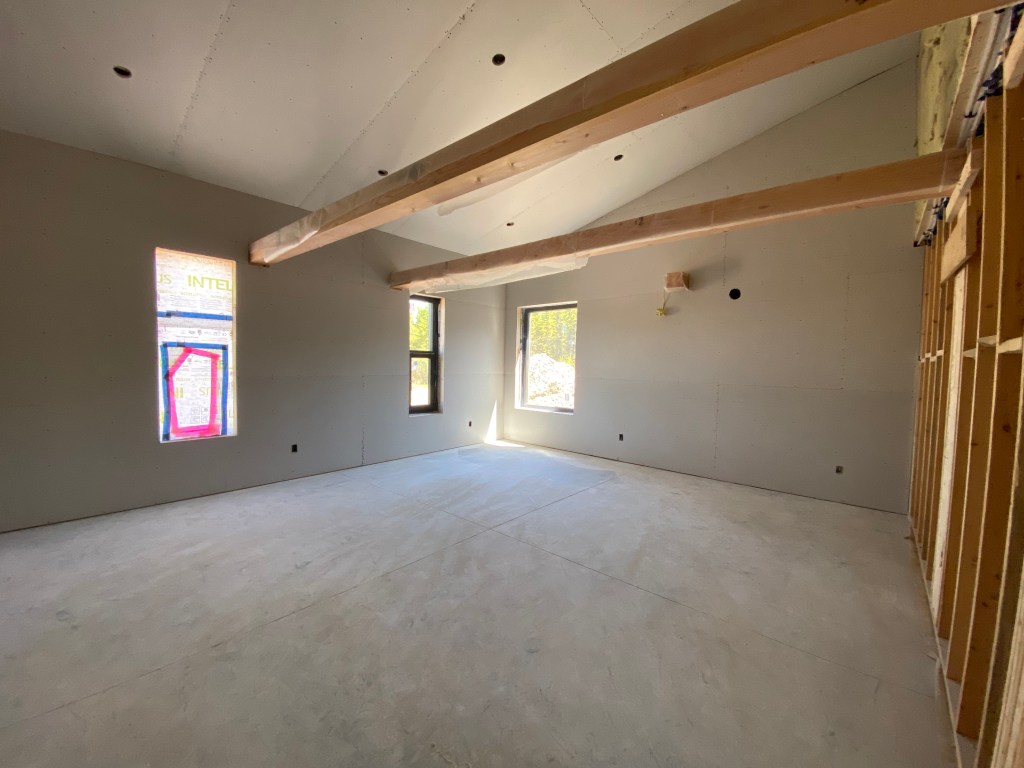
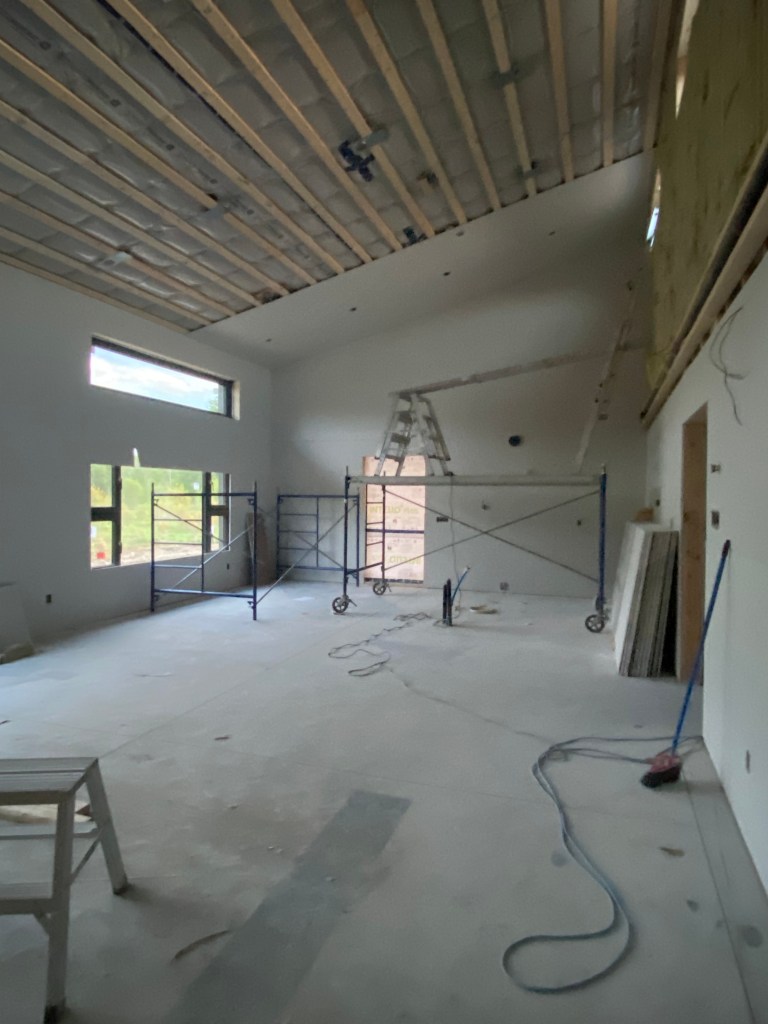
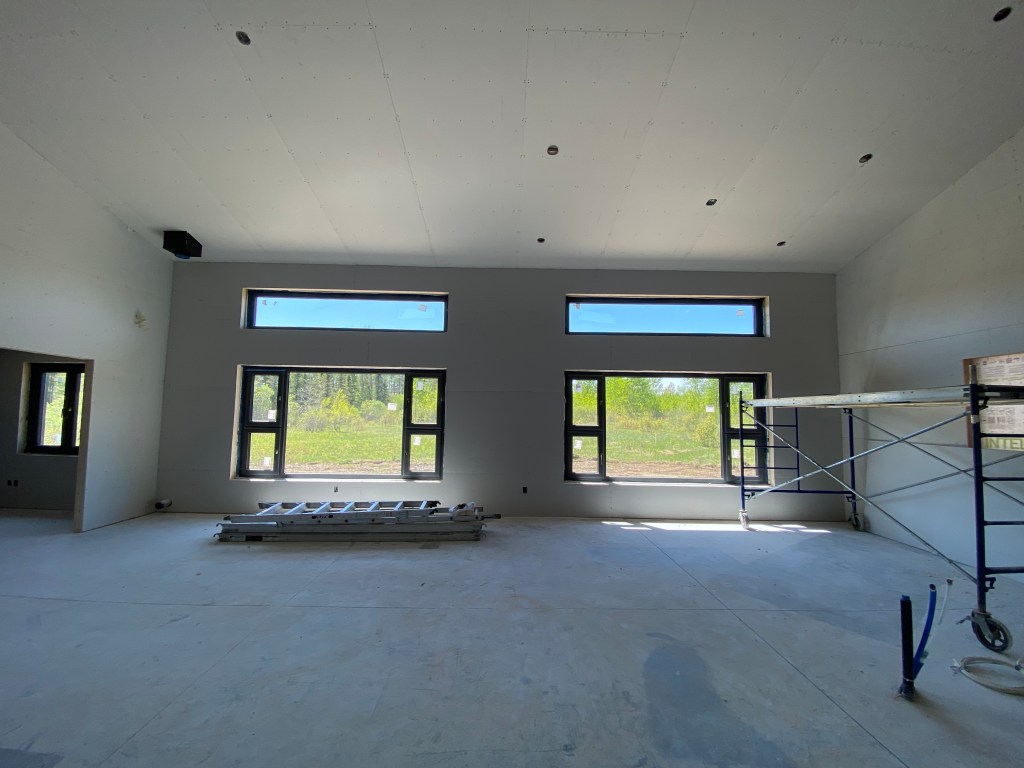
After drywall boards went up, it took a week for mudding and sanding to be completed. We got a taste of the misery that is drywalling when we tackled the garage wall that’s shared with the house, hoisting heavy boards up into the rafters and mudding the seams to create an air barrier between house and garage, as required by code. 
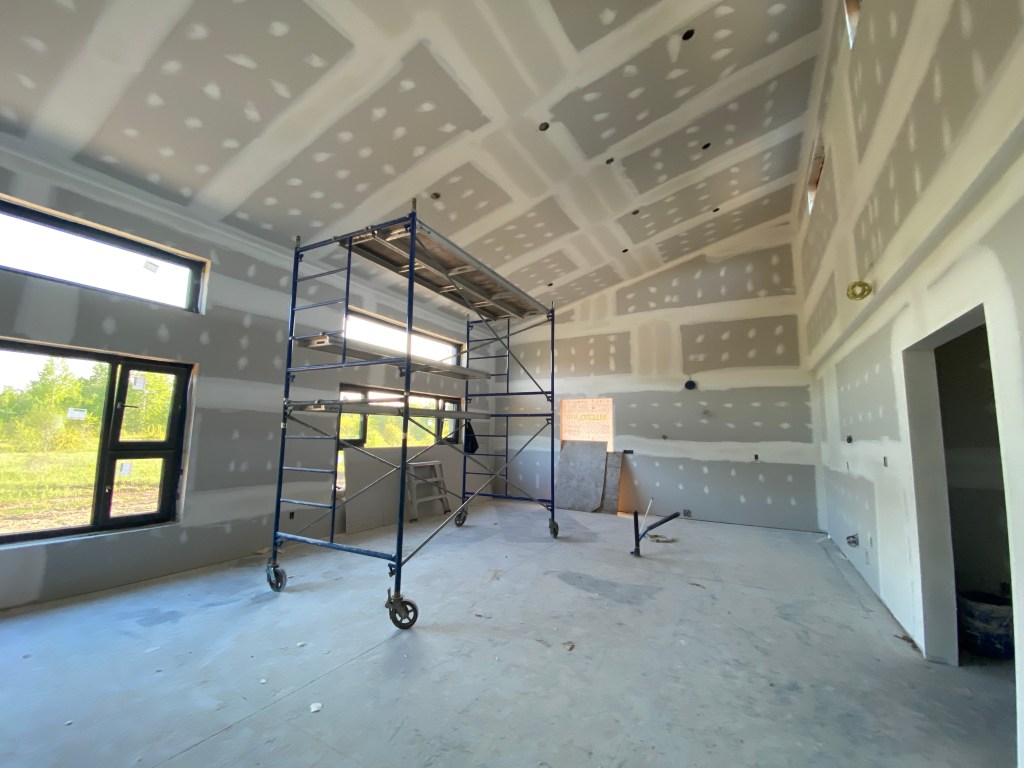
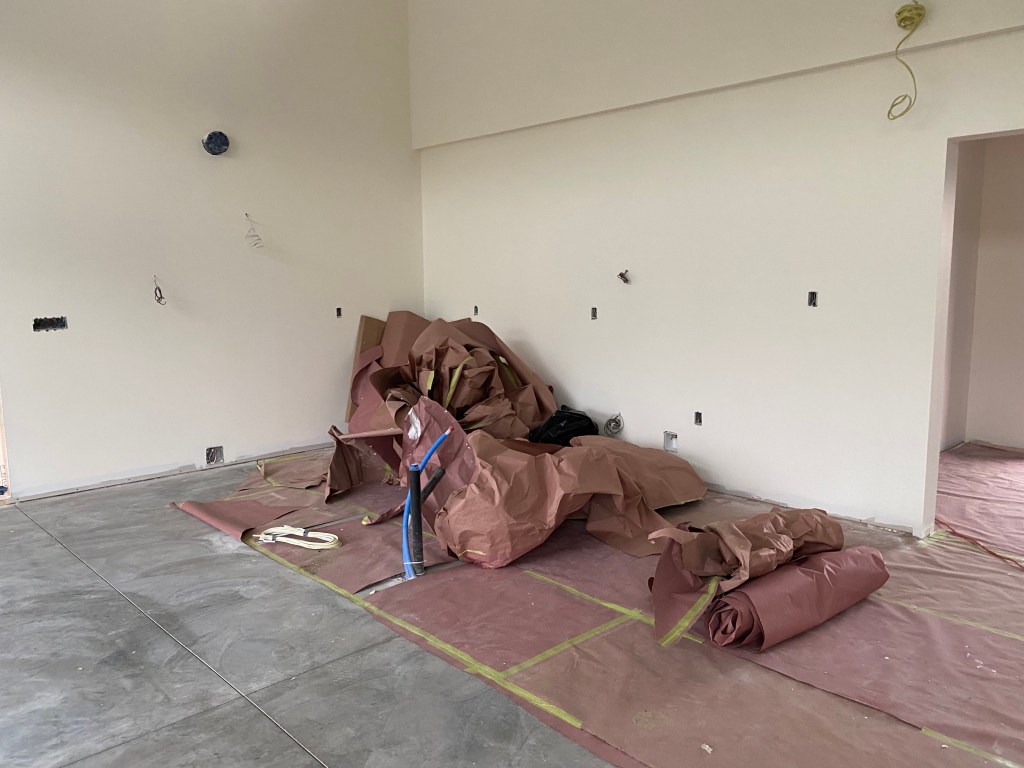
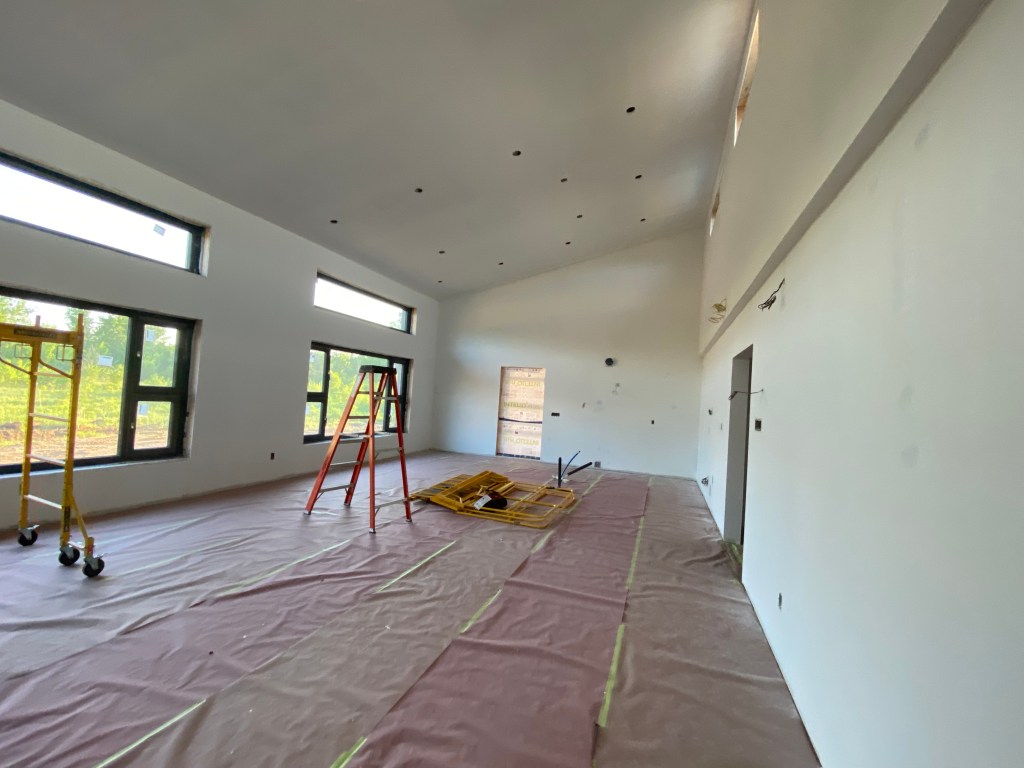
Messy work done, we fired up a generator and spent a day vacuuming up six months’ worth of dirt, construction debris, and drywall dust to clean up ahead of painting. Our floors were looking grim, but we were assured it would clean up easily after painting was done. To keep things on pace, we hired professional painters. We had strongly considered doing our own painting but decided to hire it out to save ourselves teetering about trying to cover those high ceilings. We’re glad we did as they got the house primed and coated with two coats of paint in less than a week.

We were moving along at a good clip and looking forward to getting the floors sealed to bring them back to the shiny, polished look. First though, they needed a good cleaning. We had a short window to get this done – our concrete installer could only come on a rainy day when he couldn’t pour slabs outside. With a single day of rain in the forecast for the next few weeks, we scheduled our project manager to clean the floors the day after painting was complete and. . . it didn’t work. Determined to keep things on track, we rushed over after work and spent seven hours scrubbing and rescrubbing the floors until there was no light left in the day. We left with our fingers crossed that our efforts had paid off. Thankfully, they had and the contractor was able to seal it the next day, bringing back the shiny finish to the floors. We’ve since been diligently recovering them with our endless supply of cardboard from our kitchen cabinets, which we’ve also been hard at work installing.
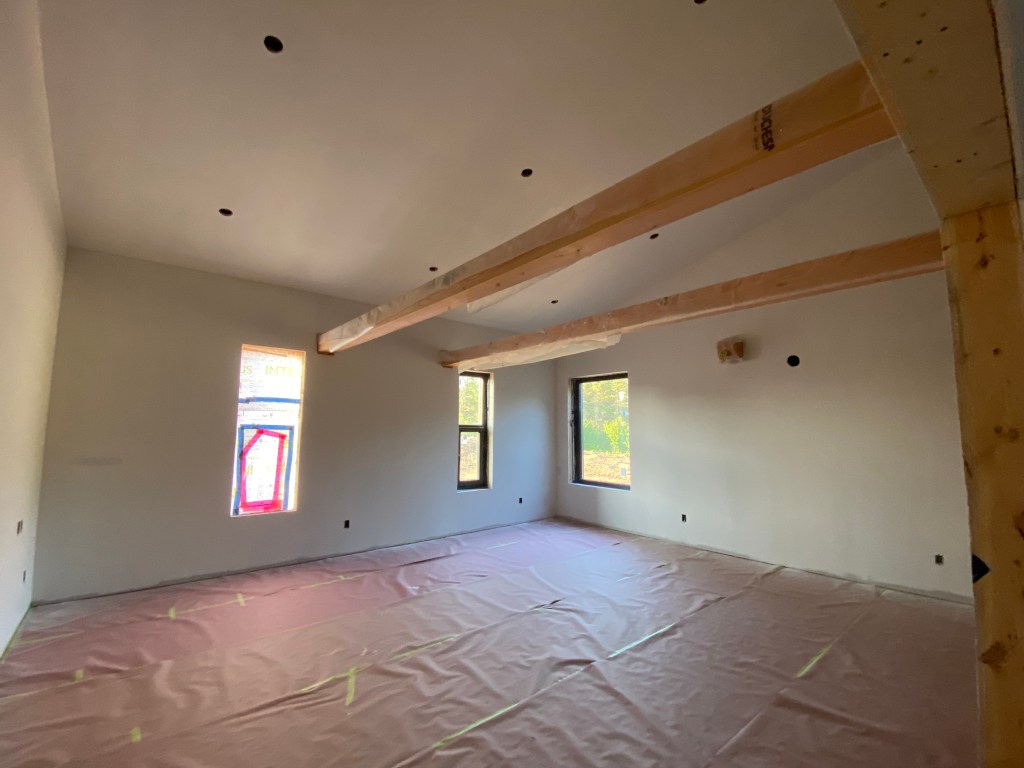
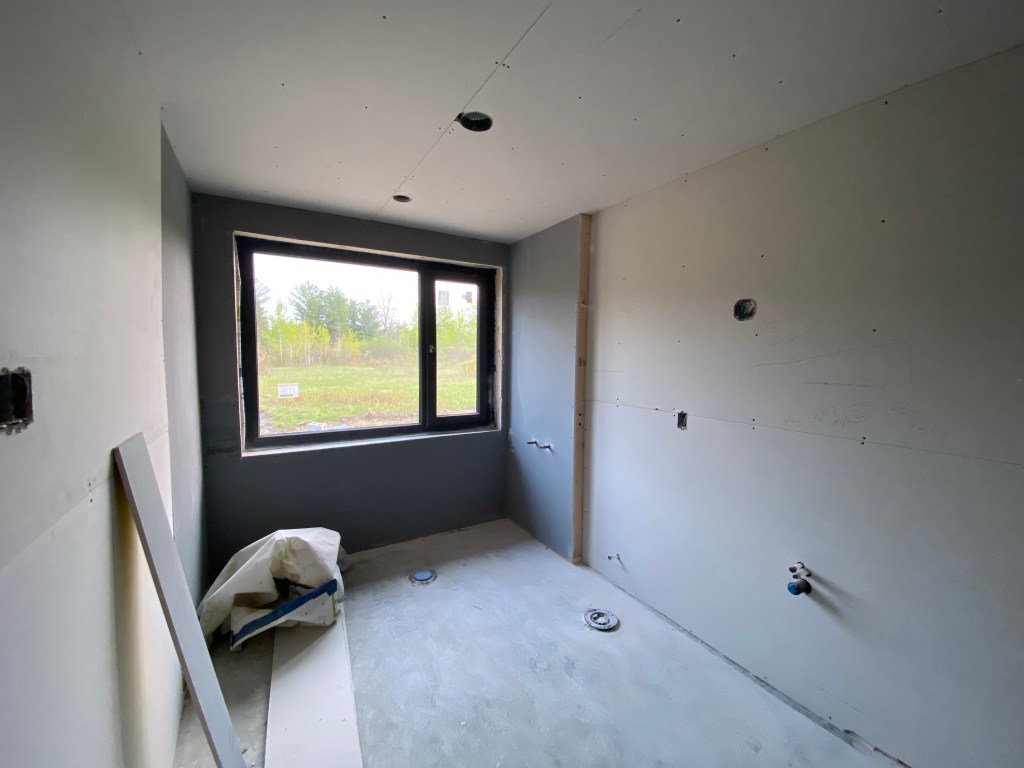
We also had the shower surrounds tiled in the hall bath and the ensuite. This took several weeks of starts and stops but turned out well.
Drywall and Septic System

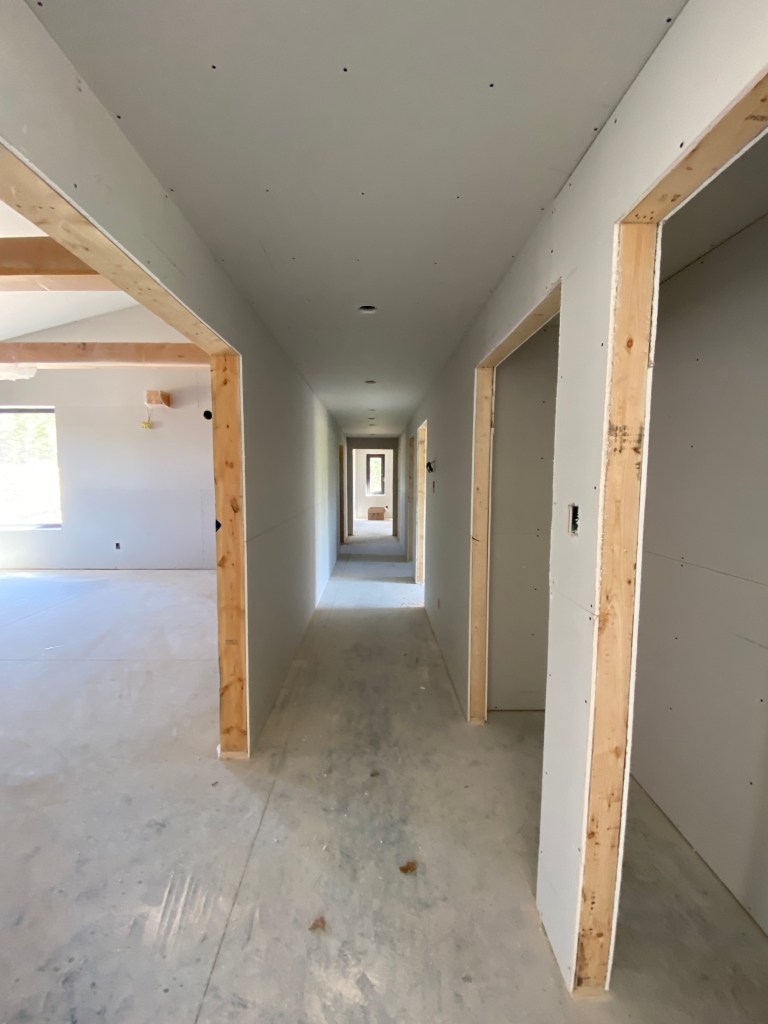
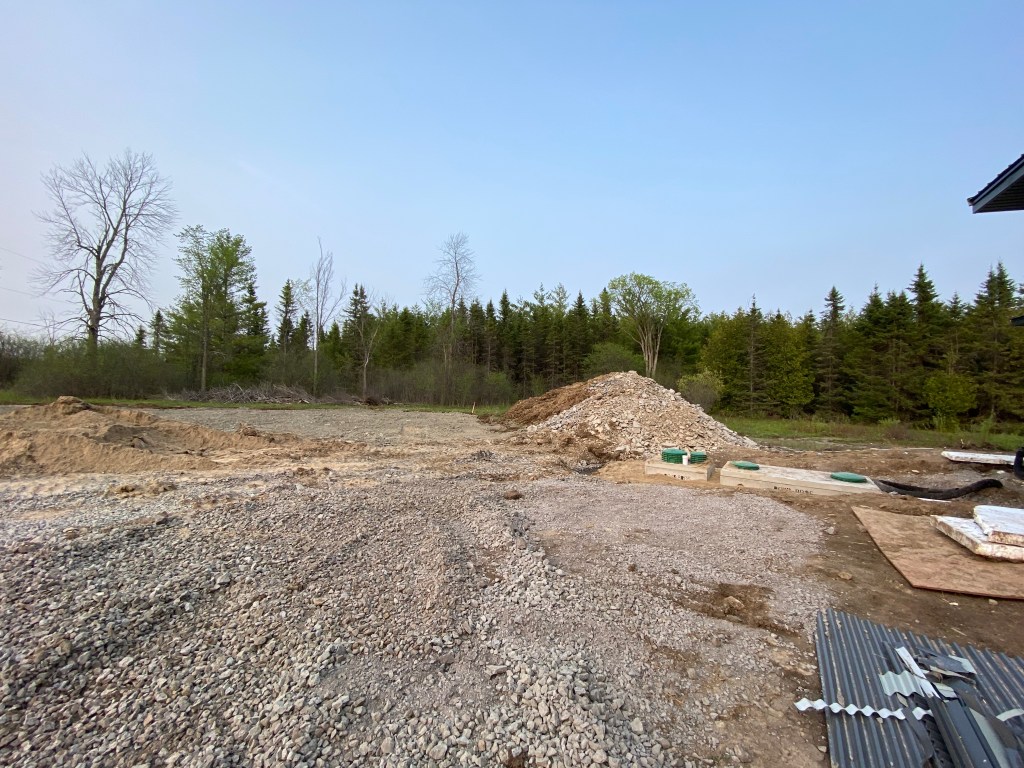
This past week the interior of our house was transformed while the surrounding terrain got torn up in a renewed burst of activity. Our drywallers were speedy and got all the boards up in the space of a week! There’s still a way to go but it’s looking less and less like a construction site. The same can’t be said about the outside, where the excavator has been pounding through bedrock to install our septic system and hydro trench.

We had originally planned to have the septic system and well installed while site was being excavated last summer/fall, however, we couldn’t make the timing work with our schedule and the limits imposed by our construction mortgage. We found that the bank’s appraisers use a template to assess progress that is based on a typical urban house where service connections involve a simple tie in to City services. What they don’t consider is that installation of a septic system and well in a rural area is more complicated, awarding them few percentage points towards the overall completion rate, despite being some of the bigger ticket items. The City of Ottawa also imposes seasonal load restrictions on roads during the spring thaw, so we had to wait for those to be lifted before the heavy equipment could be brought in to complete the work.

Getting our hydro hookup has similarly not been straightforward. Our electrician originally thought our property was under Hydro One jurisdiction, even though we’re in Ottawa, and applied for approval back in the fall (determining jurisdiction is apparently not as straightforward as geographic boundaries nor, oddly, something either company can over the phone). After making it to the front of the queue, he learned that our property was under Hydro Ottawa after all and had to start over. Then there was a long wait to get a new pole installed, followed by a long wait for confirmation of whether we’d be charged for the new pole (we weren’t) and then back and forth over whether we could run the hydro line around or driveway (which would be less costly) or would have to go under. Hydro Ottawa decided it had to go under the driveway and would need to be encased in concrete. We’re now waiting for a series of inspections and keeping our fingers crossed that the driveway can be put back together by end of week so the septic installation can wrap up.

Our tasks for ourselves for the coming weeks are to insulate and drywall the garage wall that’s shared with the house, select paint colours and tile, and beginning assembling our kitchen cabinets, which we plan to install ourselves.