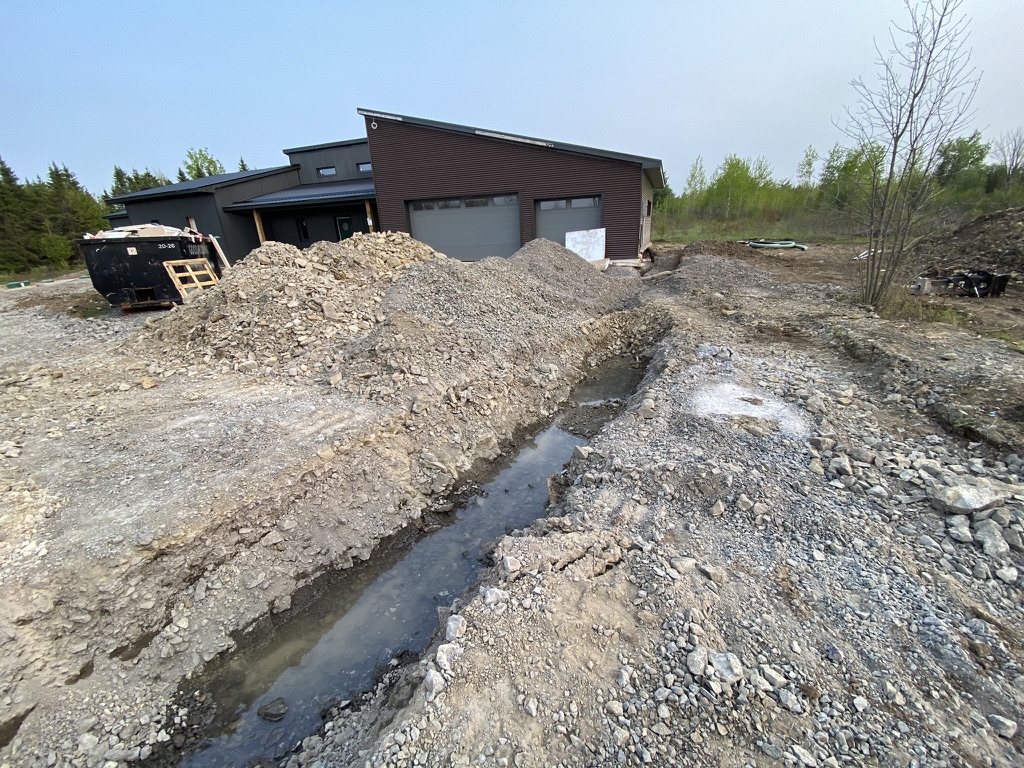
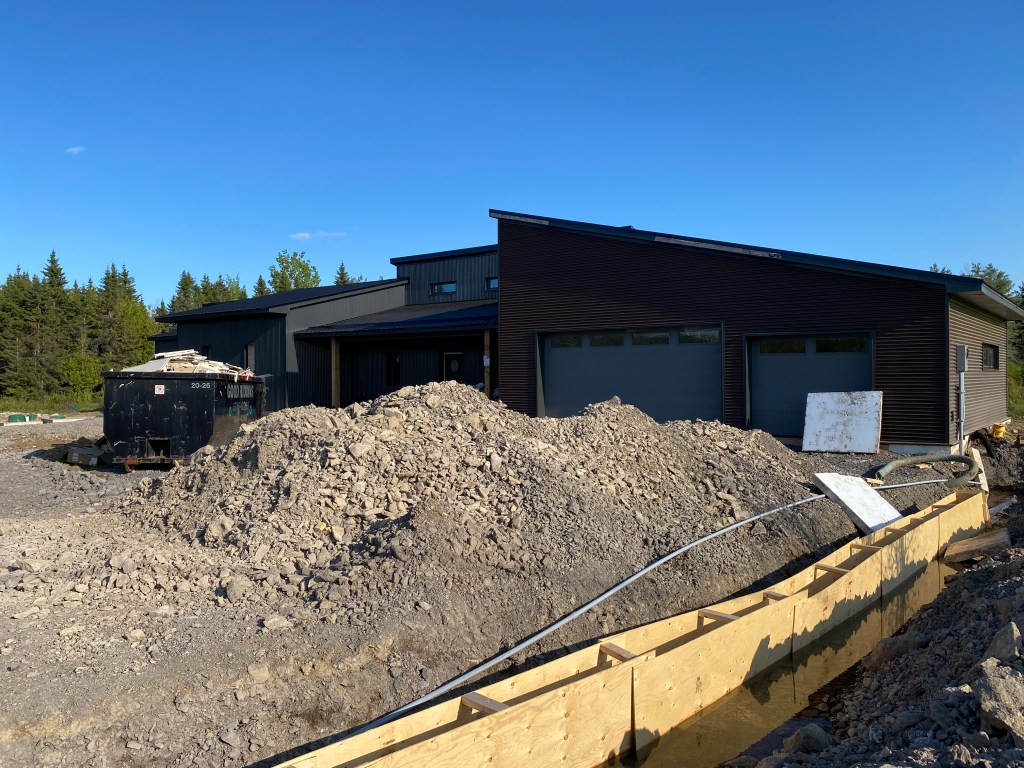
We’ve been on a weeks long sprint now and things are coming together. After painting was done, we needed to get services to the house so we could get electrical, plumbing and HVAC done. Because we’re on a rural lot, that meant that we needed a septic system for sewage disposal and a private well for drinking water. Normally these things come first in the build sequence, but we did it all backwards to complicate things (because framing the house pushed so long into the winter, we ran out of time and had to wait for spring).
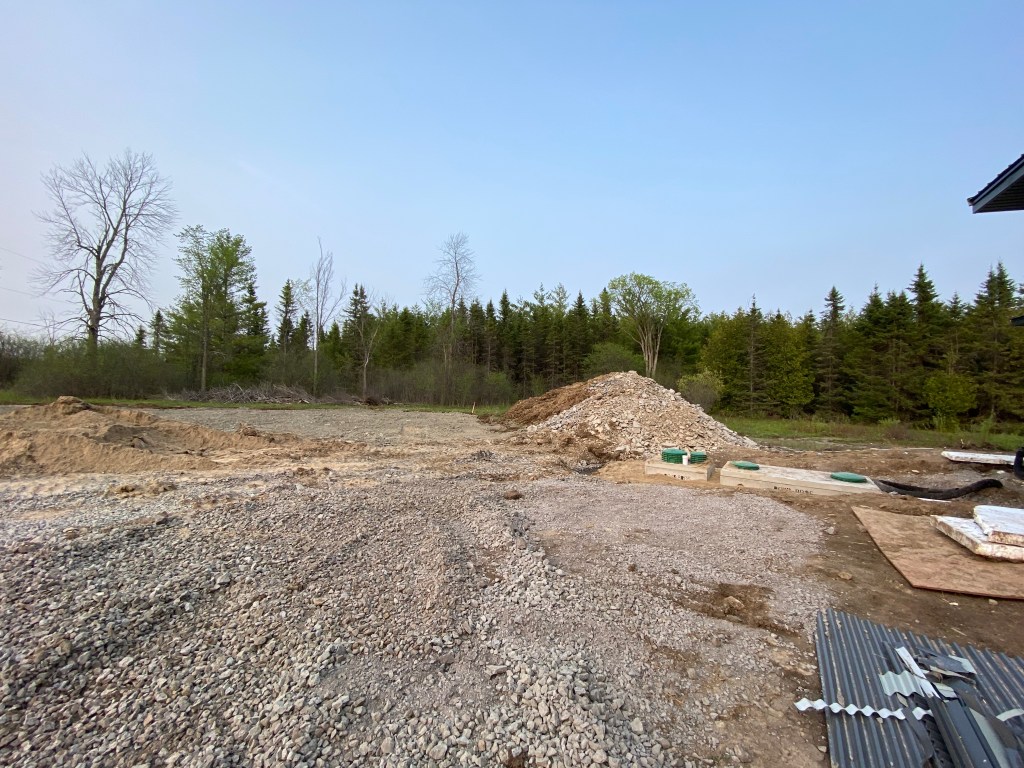
Our original plan had been to install a conventional septic system with a septic tank and leaching bed and effluent feed via gravity flow. We had to adjust course after we got a gob-smacking quote for the amount of fill that would have been needed to grade our lot to accommodate this. Our redesign adds a pump chamber and dosing pump to distribute effluent over a mounded leaching bed. This was a bit more expensive than a conventional system, and means we have a big mound on our lot, but still better than spending $100,000 on dirt in our books.
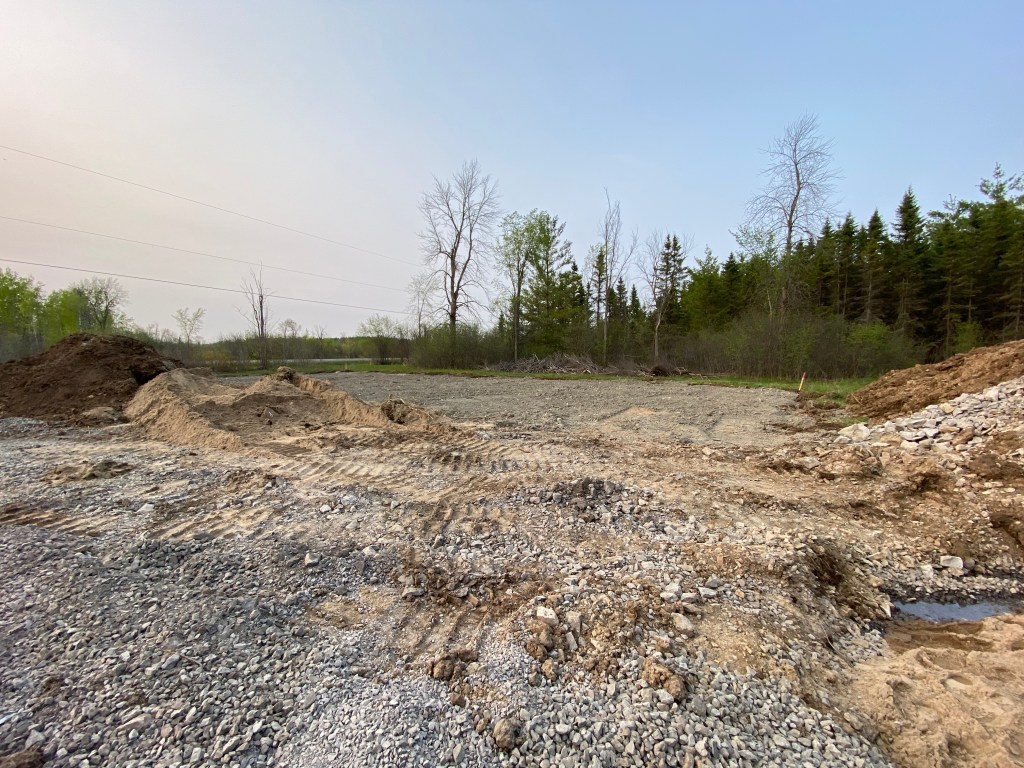
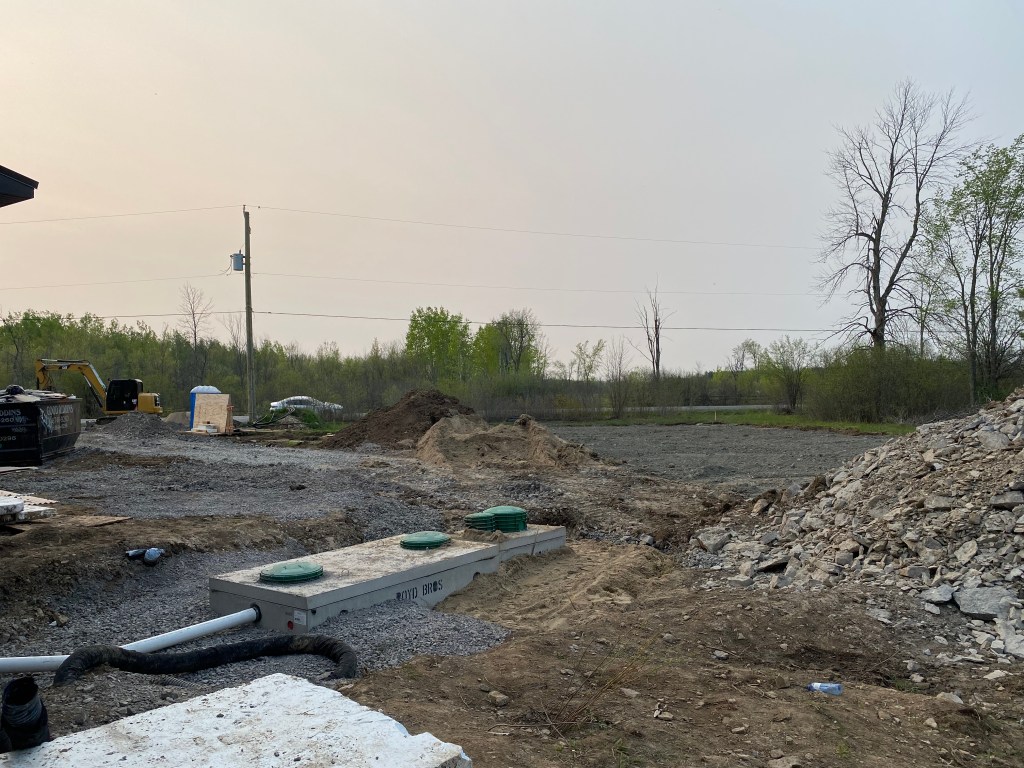
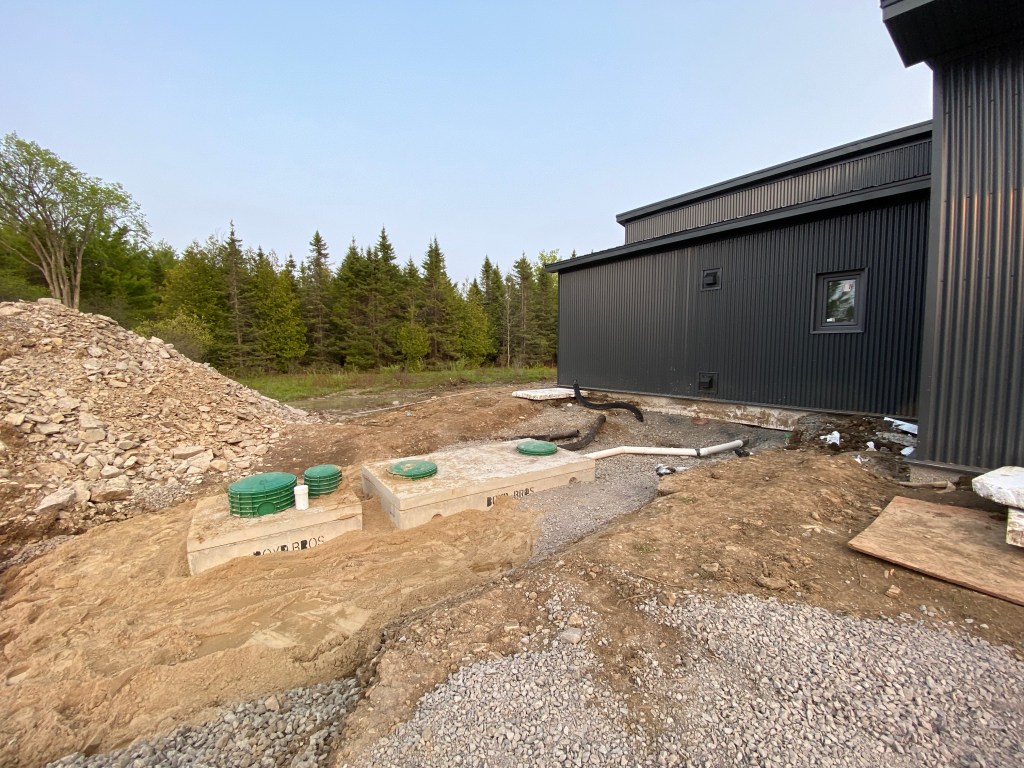
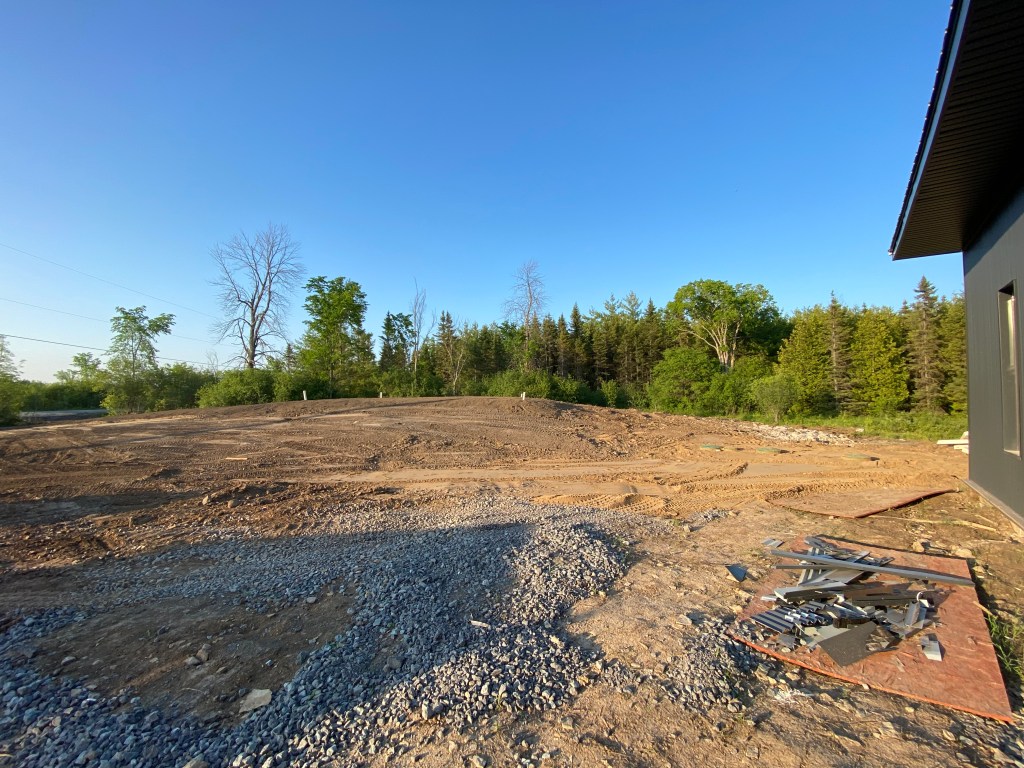
Excavation made us no friends with the neighbours as the septic installers had to hammer through bedrock to install the septic tank. Once that was done, however, things were looking like they’d wrap up quickly when our electrician popped up with bad news – Hydro Ottawa had decided that we could not run our electric hookup along the side of the driveway as planned, but rather, we would need to install a trench under the driveway and encase the cables in concrete. This, naturally, entailed even more bedrock hammering and rendered our site mostly inaccessible for other work for a month and a half while we waited for all the necessary inspections. Oddly, the hydro inspector was a bit perplexed about why we’d been required to do all this, however, we’re thankful the work got in under the wire just before Hydro Ottawa went on strike. With electricity hooked up, we could move along with everything else.

For the well, we had to wait for seasonal load restrictions to be lifted for the 80,000 lb truck to be able to come and drill. Spring is not an ideal time to drill wells, and there was some hemming and hawing about whether the ground was too soft to bring the truck in, but it was ok in the end and no one got stuck.


The well technician found water at 140’ down with a good flow rate of 20 GPM. We needed to test the water to make sure it was safe to drink. Public Health Ontario provides free well water testing for bacterial indicators (E. coli and Total Coliforms). Our first test came back with a result of overgrown for Total Coliforms, but we discovered our contractor hadn’t disinfected anything after installing. So, we shock chlorinated the well and it’s been fine since. Though only bacterial testing is required for occupancy, we also got the water tested via a private lab for general chemical characteristics and heavy metals. Those tests told us what we’d suspected – that we have very hard water and will need a water softener to prevent scaling in our pipes and appliances – but we’re happy to know that we have good water quality overall.
It’s much easier to work on a house with electricity and running water where you don’t need run in and out to switch a generator on and off or try to clean things with bottled water. It really helped us with our next big task: installing our kitchen.



 Marlborough Forest House