Submitting for Permits

At the beginning of 2022, all our ducks were nearly in a row when we caused our own delays by rethinking our house design. It wasn’t a major change in the grand scheme of things, but we ultimately decided to go with our gut on two things weren’t quite sitting well with us. One was to bring our kitchen closer to our south-facing windows for more natural light and views and the other was to nix the idea of an unconditioned entryway – our architect had used in other projects but that we weren’t totally sold on it. 

My take is that you shouldn’t have to work too hard to convince yourself that you can live with something, so if it bothers you, change it while you have the chance. Also, it’s best to feel sure by the time you submit for permits because things start to feel very real from that point. Designs done and dusted, we were ready to submit for permits at the end of May 2022.

There are a few approvals we needed to get before breaking ground on our house, including:

  1. Septic permit
  2. Private approach permit
  3. Building permit

Each of these needed supporting documents and had fees attached.

Septic Permit

Because we are building in rural area, we won’t have any connections to city services for sewage or water. This means we need to install a septic system and a well. In Ottawa, septic systems require a permit, which is issued by the Rideau Valley Conservation Authority (RVCA). To apply for a permit, you need a site plan showing your proposed system and a grading plan. We hired an engineer (our architect arranged this) to draw these up. We found placement of the house on the site seemed fairly arbitrary, so there was a lot of back and forth with the grading designer to make sure it was oriented properly and located where we wanted it.

We paid around $900 in application fees and had our permit issued by RVCA within about two weeks of applying.

Private Approach Permit

If you are installing a driveway in Ottawa, you need a private approach permit to connect to the City’s property. Inspections and approvals go through the Right of Way Permit Office. You need to provide your site plan showing your proposed driveway, an application fee ($182), and a $3,000 Right of Way damage deposit. You can apply for a refund of the damage deposit after the work is done, provided no repairs to City property were needed.

One inefficiency we found is that your building permit application must be submitted in person at a City of Ottawa Client Service Centre. This is also where you pay your ROW damage deposit. The private approach permit application and application fee, however, must be submitted separately to the Right of Way Permit Office, which can only be contacted via email. You email your application then wait for them to call you to collect payment. 

The inspector texted me a picture of my approval within a few days of submitting my application, but it took another four weeks before I received a call back from someone to collect payment and issue the official permit. Perhaps some additional review takes place behind the curtain.

Building Permit

Building permits are issued by the City of Ottawa Building Department. This is a big package to pull together requiring a fair bit of coordination and includes:

  1. Your completed application form (architect completes most of this)
  2. Two hard copies of construction drawings reviewed and stamped by a structural engineer (architect created drawings and had them reviewed)
  3. Your septic permit, septic design and grading plan (completed by septic and grading designer, approved by RVCA)
  4. Your HVAC design (HVAC designer creates this)
  5. Your truss design (truss company designs this)
  6. If applicable: woodstove details, including manufacturer instructions for installation of stove and chimney
  7. A cheque for your building permit fee
  8. A cheque for your development fees

The building permit fee is calculated based on the total square footage of your house while the development fees are based on where you are located within the city. Our total development fees were about $20,000, which is at the low end for Ottawa.
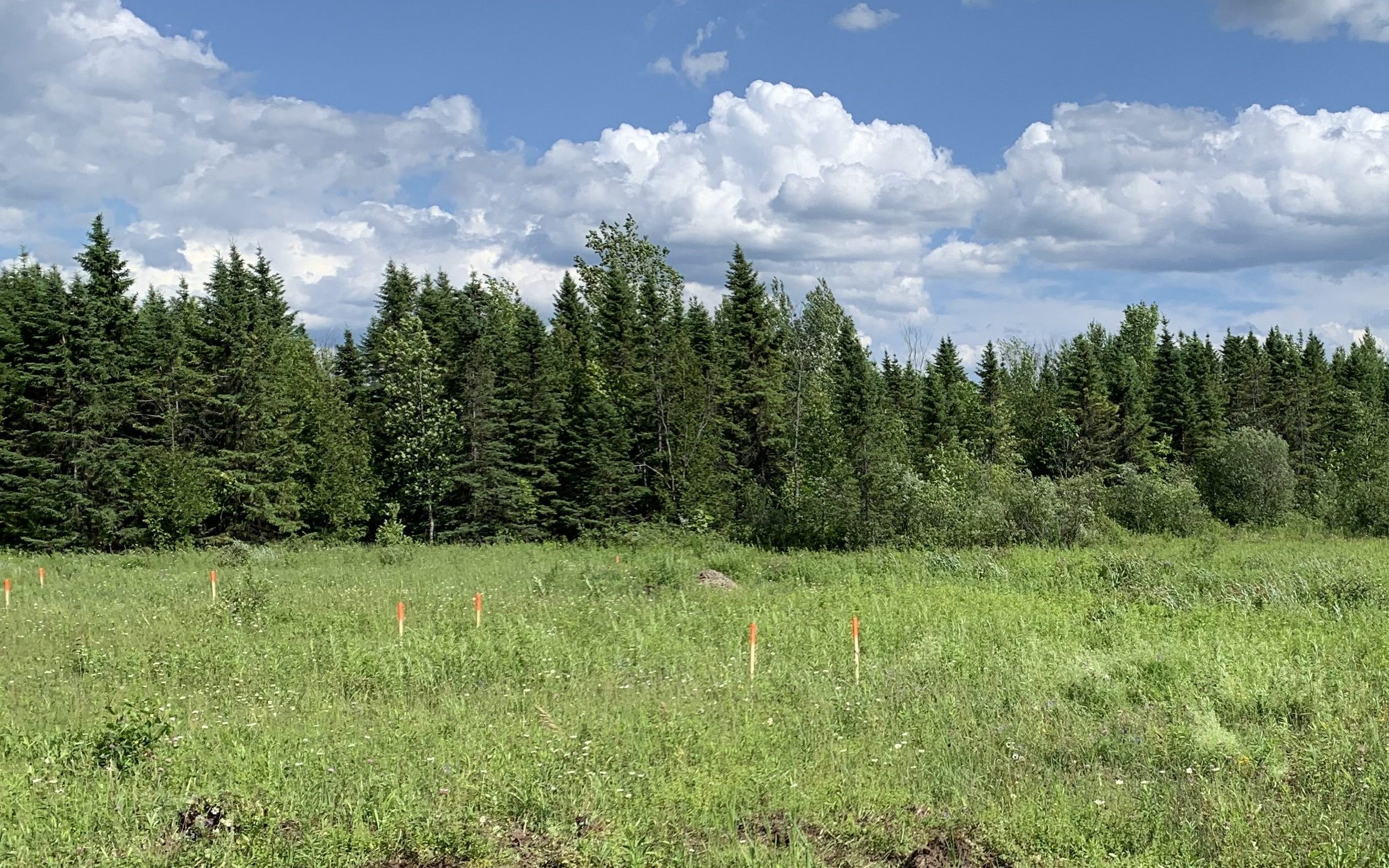
Image of raw land with surveyor stakes marking perimeter of house to be built
Ready to build at last!

Once the package was submitted, the waiting game began. At the counter, the clerk said it takes about 10 days for a permit to be issued. Ours took about six weeks, which our architect and project manager assured us was quick compared to other projects they’d seen, particularly during pandemic times. 

Once submitted, your application does the rounds around the building department and if there are questions, the reviewer sends you a formal letter (via email thankfully) requesting a response. We only received two questions. The one we could answer instantly and the other – a request for additional detail about posts on our porch – required us to get updated drawings from the structural engineer. In June 2022, we had the official green light to proceed! This was 13 months after closing on our land and starting our build planning.
Owner, Builder, Project Manager

It’s easy enough to indulge in the fun parts of designing a house, but inevitably, practical concerns bring you down to earth. After all, the perfect floorplan doesn’t mean much if you can’t afford to build it. While an architect is an expert at giving form to your ideas, the best person to tell you how much a house will cost is someone with experience buying building materials and hiring trades. You need a contractor.  

If you’re building a net-zero passive-style home, you’ve narrowed the field quite a bit to a short list of people with experience building this type of house. We started our search by Googling contractors in our area that advertised net-zero builds and found three or four to interview. This process took some time. Contractors are chatty people, as a rule, and it can take persistence to get from initial talks and hypotheticals to firm answers. Still, we found it helpful to show them what we were working on to figure out whether it was even within the realm of possibility to build within our budget.

We spent several months in a Goldie Locks period of feeling people out. One had good pricing but was moody and combative, another talked a good game but lacked follow through, and one insisted it was impossible to build a house for less than seven figures while trying to scare us away from the competition by professing ominous, but vague concerns for our wellbeing. We eventually settled on one our architect had worked with recently, Kaner Contracting. They were good-natured, organized, and could work with our budget.

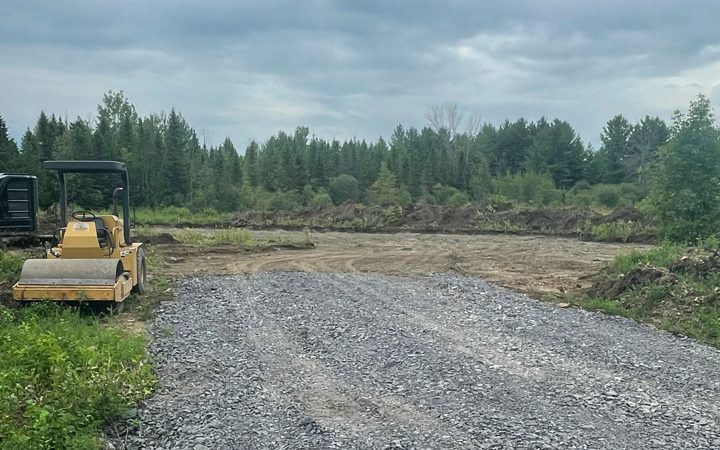
Image of steamroller on excavated land with gravel driveway
Ground officially broken!

A word on terminology, in Ontario, the New Home Warranty Program exists to ensure builders provide warranties on homes they build. In the usual scenario, a builder has control over the project and the subcontractors who build your home and then warranties the work after you take possession. If you’re building your own home, however, you may opt to be an owner-builder, meaning that you retain control over the project and are responsible for hiring subcontractors directly. You may hire a project manager with experience in building to coordinate the project. In this case, you don’t have a builder to warranty the build, though you still have the warranties of each sub-contractor. This is the route we opted to take for greatest control over our project. We also wanted to reserve the option to do some things ourselves where it’s within our abilities. All this to say, though I use contractor or sometimes builder as shorthand, we are our own builder and hired a knowledgeable project manager for our build.

With our project manager hired, it took several more months to get anywhere close to firm costing of our project. It seems that subcontractors don’t like to quote services too far out and, factoring in rapidly changing material prices throughout 2021-2022, a project estimate was a slippery fish to catch. We found ourselves a bit bemused trying to figure out how to keep within budget. All our ideas for keeping building costs down – things like simplified footprint, lower ceilings, less square footage – we’re shrugged away by contractors as saving us a bit but ‘not that much.’ Ultimately, it seems, building a house is a leap of faith. We got as close to a comprehensively quoted project as we could, took a hard look at our finances, our mortgage approval, and worst-case scenarios, and jumped. 

Our project officially kicked off in June 2022 with surveying and installation of our temporary access. We quite like our wide driveway!

Dreams Take Shape

Building a custom home is certainly a privilege and the experience of a lifetime. We spent long hours talking through what we wanted, researching ideas, reading books, exploring neighbourhoods for inspirations, measuring rooms, and sketching out plans. The process of designing a house truly forces you to think thoroughly about how you envision your life, now and in the future, how you use spaces, and what you can live with or without.

We eventually settled on a list of goals for our home, which we talked through with our architect in the beautiful home she designed. A week or so later, she let us know she had a preliminary design to show us. With bated breathed, we excitedly awaited the big reveal and… we didn’t like it! The first sketch we saw had the elements we’d discussed but didn’t feel right for us. But designing a house is a process – we talked it through, pointed out what we liked and did not, and sent some more sketches of our ideas. A week or two later she came back with two new options and this time we were quite pleased!

I downloaded RoomSketcher, a free floorplan design app, and recreated the plans. This allowed us to play around with ideas, move furniture around, and visualize the spaces in 3D. We polled friends and family on their thoughts and eventually settled on the plan we liked best. From there, we had quite a bit of back and forth on window and door configuration, trying our best to get right the details that are hard to change.

Image of cardboard house with LEGO furniture
Our little Bristol Board home with Lego furniture and lots of houseplants for that homey feel.

It’s hard not to get excited as you picture life in your future home. Not to be satisfied with digital renderings, we wanted something tactile we could walk through and play with. We bought a 60-metre measuring tape and pinned our floorplan on our land with sticks and string. We even got crafty and spent a couple cozy evenings constructing a scale (though somewhat floppy) model out of Bristol board and Lego.

One thing that’s always in mind when building a house (at least in my experience) is budget. We learned quickly that if you want to keep your design within budget, you need to loop in a builder early as they’re the ones with experience costing materials and labour. So, after a few weeks working on the design, we were happy with our plan and turned our attention to choosing a builder, another learning experience. As it turned out, we’d have a few more tweaks later in the process but that’s still to come.

This is the list we dreamed up of wants/goals for our home:

Multifunctional Spaces and Room for Hobbies

  • Every space has a purpose
  • Spaces align with how we actually use them (i.e., no formal dining room)
  • Spaces are multifunctional and accommodate togetherness or privacy
  • Small office/guest room/flex space 
  • Minimize single use spaces, such as hallways
  • Flexibility to reconfigure spaces if needed, e.g., add more bedrooms
  • Lots of storage for indoor and outdoor hobbies, large garage for outdoor equipment

Spaces for Privacy or Togetherness

  • Home gym/activity room/tv room to accommodate heavy equipment
  • Preferably single level, slab on grade
  • Places with sound isolation for noisy activities
  • Primary bedroom has privacy/retreat feel
  • Kitchen at the heart of the home
  • Large kitchen with lots of storage and room for two cooks
  • Open concept kitchen/living room for informal living and entertaining

Self-Sufficiency and Eco-Friendly

  • Set up for self-sufficiency e.g., wood stove for back up heat, solar/net zero ready/passive house
  • Passive solar orientation, minimal glazing on West and North sides
  • Lots of natural light
  • High ceilings in gym and kitchen/living room for airy feeling, lower ceilings in bedroom area for coziness
  • Bedrooms oriented to East for morning sun
  • Kitchen and living room oriented to south for sun
  • Modern aesthetic
  • Simple, easy to maintain finishes
  • Prioritize durable, efficient, low maintenance shell (e.g., passive house wall construction, passive windows and doors, metal exterior siding/roof)

Indoor/Outdoor Living

  • Orient house for privacy from the road
  • Dedicated laundry room and mudroom to leave outdoor dirt outdoors
  • Screened in porch and patio for outdoor meals/outdoor living spaces (and to keep out bugs)
  • Easy access to kitchen garden
  • Main view looking South over property
  • Maximize open spaces on property for sports and activities
  • Shelter house near forest, provide easy access to trails

Don’t Want

  • Formal dining room
  • Too many bedrooms/more house than we need
  • Bedrooms or bathrooms used only for guests
  • Cramped entryways
  • Limited storage
  • House prioritizing public faces
  • Propane/gas heating systems